
Picking a lift for a new building often gets left until late in the project. The structure is planned, the facade is finalised, and then someone asks, “So which lift are we going with?” By then, the shaft size, pit depth and machine room decisions may already be locked in, and your options have quietly shrunk.
A passenger elevator is something residents or tenants will use thousands of times a year, for decades. Choosing it on price or looks alone rarely ends well. Here are the technical factors that matter most, explained without the jargon.
1. Capacity and Traffic Flow
Capacity is usually stated in persons or kilograms, and it should come from how many people will actually use the lift, not a rough guess. Think about the number of floors, flats or offices per floor, and peak periods like the morning rush or lunch hour.
A residential tower with 4 flats a floor has very different needs from a commercial building with hundreds of employees arriving within the same 30 minutes. For larger buildings, a traffic analysis helps decide both the car size and how many lifts you need. Eros passenger elevators are available in capacities of up to 24 persons.
2. Speed and Travel Height
Speed should match building height. A slow lift in a tall tower means long waits and frustrated users, while an unnecessarily fast lift in a low-rise building adds cost without real benefit. As a rough guide, low-rise buildings are typically well served by speeds around 1.0 to 1.5 m/s, while high-rise towers often need 2.5 m/s or more.
Eros lifts reach speeds of up to 5.0 mps, travel heights of up to 180 m and up to 61 stops. To give you a sense of real-world sizing, Runwal Bliss runs 10-passenger lifts across 55 stops at 3.0 mps, while Balaji Vertu Tower uses 20-passenger lifts over 45 stops at 3.5 mps. We’ve covered tall buildings in more detail in why high-rise buildings in Mumbai need high-speed passenger lifts.
3. Drive Type: Gearless Traction or Hydraulic
Most modern buildings now use gearless traction lifts. They’re quieter, more energy efficient and need less maintenance than older geared machines. Hydraulic lifts still have a place in low-rise buildings with limited travel, where their simple design can be an advantage.
Eros offers both gearless traction and hydraulic options. Its gearless design is rated to save around 40% energy compared with traditional traction elevators, along with high torque and low noise.
4. Machine Room (MR) or Machine Room-Less (MRL)
This decision affects your building design directly. An MR lift needs a separate room, usually above the shaft, to house the machine and controller. An MRL elevator fits all key components inside the shaft itself.
MRL designs free up space on the terrace, can lower construction costs and often need less headroom and pit depth, which can allow a larger car in the same shaft. MR setups still make sense for certain high-speed or heavy-duty applications. Eros’ compact machines support both configurations, giving architects more flexibility.
5. Shaft, Pit and Headroom Dimensions
Every lift needs a specific shaft size, pit depth and overhead clearance, and these vary by model, capacity and speed. Share your drawings with the manufacturer as early as possible. Fixing a shaft that’s a few inches too small after construction is expensive and sometimes impossible. Features like a smaller motor and traction sheave, or an inspection and test panel built into the door frame, can save valuable space.
6. Control Systems and Ride Quality
What you feel inside the car, a smooth start, a gentle stop and level floors, comes down to the drive and control system. Look for:
- VVVF drives for precise speed control and smooth acceleration
- Microprocessor-based controls with fast communication (such as CAN BUS)
- Direct ramp-to-stop levelling, which reduces creep time at each floor
- Self-learning software that adapts to traffic patterns and reduces waiting
Eros combines these with smart VVVF drives using Heidenhain technology and contactless components for quiet, comfortable rides.
7. Safety Features and Compliance
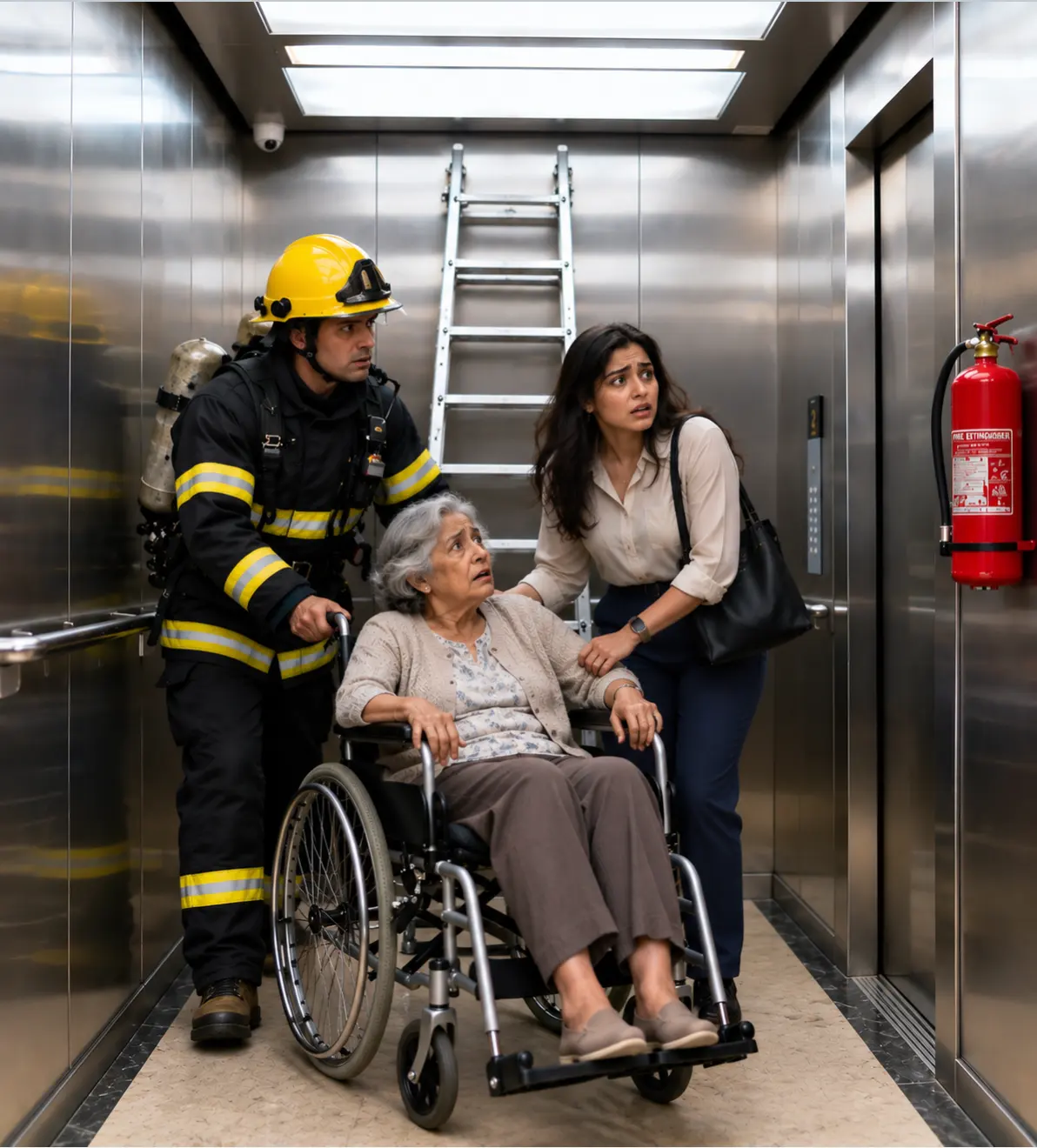
Safety isn’t optional, and it shouldn’t be treated as an add-on. At a minimum, check for an Automatic Rescue Device (ARD) that brings the car to the nearest floor during a power cut, overload sensors, an emergency alarm and overspeed governors in both directions. In a city like Mumbai, where power fluctuations still happen, ARD is especially important.
Also ask which codes the lift is built to. Eros elevators are manufactured and installed in line with Indian (IS) and EN 81 standards and ISO 9001 quality systems, with ARD included as standard in all passenger elevators. For high-rise projects, check your fire evacuation lift requirements too.
8. Smart Monitoring and Long-Term Maintenance
The lift you choose will need servicing for its entire life, so think about maintenance from day one. IoT-enabled monitoring and real-time diagnostics let service teams spot problems before they cause a breakdown. Ask about spare parts availability, service coverage in your city and what an AMC will include. Eros supports its lifts with OEM-backed AMC services, including remote monitoring and preventive maintenance.
Don’t Forget Cabin Design
Once the technical side is sorted, the cabin is where users form their impression. Eros offers finishes in gold, rose gold, stainless steel and bronze, along with options for operating panels, false ceilings, flooring and handrails. You can read more about how design shapes the user experience in our post on modern passenger elevators.
Why Work With an Experienced Passenger Elevator Manufacturer
EROS GROUP has been building elevators since 1947 and is a trusted passenger elevator manufacturer in Mumbai, with projects like Tata Amantra, Runwal Bliss and Balaji Vertu Tower. Our residential passenger lifts focus on comfort, quiet operation and energy efficiency, while our commercial passenger lifts are built for smooth rides and long-term reliability. Explore our passenger elevators, browse our projects or speak with our team about your building.
Final Thoughts
The right passenger elevator comes down to matching capacity, speed, drive type, space and safety to how your building will actually be used. Get the manufacturer involved early, ask the right technical questions, and you’ll avoid costly changes later.