Introduction
In the life of a building, the vertical transportation system – the elevator – plays a pivotal role in safety, efficiency and occupant experience. Over time, even a well-installed elevator may fall behind in performance, energy use, compliance, or reliability. That’s where Modernization becomes crucial. In this blog we’ll cover:
- Why and when to modernise an elevator
- The different types/levels of Modernization offered
- The benefits you can expect by modernising
- What makes Eros Elevators a strong partner for elevator Modernization
- FAQs + spots for product/offering call-outs and infographics
Why & When to Modernise
Modernising your elevator system is more than a cosmetic upgrade – it addresses core performance, safety, regulatory and operational concerns. According to Eros Elevators, key drivers include:
- Safety & reliability: Systems age, components wear out or become obsolete. Proactive Modernization ensures your elevator keeps running smoothly and safely.
- Compliance with current standards/regs: Older installations may not meet updated codes or accessibility requirements – Modernization corrects this.
- Minimising downtime and breakdowns: An outdated elevator may suffer frequent faults, longer waits, lower occupant satisfaction – modernization helps improve uptime.
- Energy efficiency & operational cost savings: New drive systems, controls, LED lighting, better regenerative braking or machine-room-less designs reduce electricity and maintenance costs.
- Enhancing building value & user experience: For residential, commercial or hospitality properties, modern elevators boost perception, mobility, aesthetics and overall asset value.
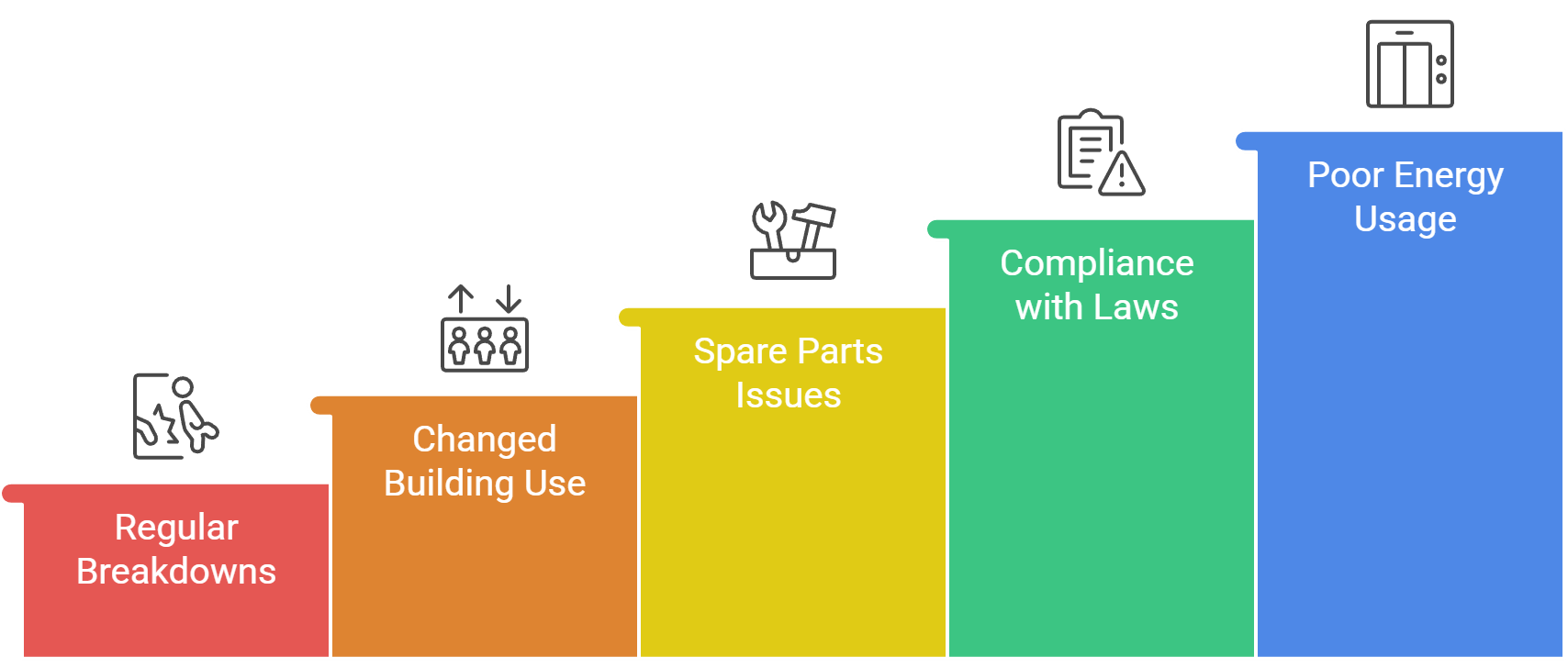
When should you consider Modernization?
- If your elevator regularly breaks down or has high maintenance costs.
- If your building’s use profile has changed (e.g., more traffic, heavier loads) but the lift hasn’t adapted.
- When you discover that spare parts for older systems are hard to source or when the manufacturer gives end-of-life notices.
- If your elevator does not comply with current laws (accessibility, safety) or your building is being renovated/refurbished.
- If energy usage or ride quality is poor, or you want to upgrade finishes/controls to meet premium expectations.
Types of Elevator Modernization
Modernization isn’t a one-size solution – there are different levels depending on age, condition, budget and goals. Here are the types highlighted by Eros Elevators:
- Partial Modernization: This level typically covers key subsystems such as hoisting machinery, electrification system, signalisation, elevator car interiors and doors.
- Full Modernization: This more extensive option involves replacing most or all of the major components – drive machine, control system, car, doors, safety devices – effectively renewing the elevator while retaining the shaft and structure.
- Adaptive/Incremental Modernization: This is a flexible approach where you upgrade modules gradually – e.g., control system now, interior car later – keeping disruption and cost in check.
- Compliance-Driven Modernization: Focused on meeting updated regulatory/safety/ADA norms (for accessibility, fire-safety, emergency communication systems), even if the mechanical parts are physically okay.
- Performance/Experience-Driven Modernization: Emphasis on ride quality, speed, noise reduction, energy recovery, smart controls, aesthetics – appropriate for premium residential/hospitality buildings seeking “experience” lifts.
Selecting the right type depends on your assessment: how old the elevator is, its usage profile, structural constraints, budget, and how long you want the next “lifetime” to be.
Benefits of Elevator Modernization
Modernising an elevator system brings tangible benefits across safety, cost, comfort, compliance and asset value. According to Eros Elevators, the benefits include:
- Reduced wait times and smoother rides: Upgraded controls and mechanics improve precision and speed.
- Lower breakdown frequency: Newer components mean fewer faults, less unscheduled maintenance, better uptime.
- Improved ride comfort & accuracy: Modern drives, better regulation, refined door systems result in a more refined end-user experience.
- Energy savings: Modern systems are more efficient – lower consumption, regenerative drives, better insulation, LED lighting.
- Enhanced safety & compliance: New safety systems, emergency lowering, better door protection, better access for differently-abled.
- Increased property value and occupant satisfaction: Especially in residential/office/hospital segments, a modern elevator is a valuable asset and selling point.
- Longer operational life: With modernised parts you essentially reset the “clock” and extend the lifespan of the elevator system, giving a better return on the original investment.
- Better maintainability and spare parts availability: Modern systems use components that are supported, easier to service and often modular, reducing downtime.
Why Partner with Eros Elevators for Modernization
Choosing the right partner for elevator Modernization is critical – you need credible experience, local support, reliable parts, and full lifecycle service. Here’s why Eros Elevators stands out:
- Founded in 1947, with deep experience in manufacturing, installation, maintenance and Modernization of elevators.
- Broad portfolio of elevator types they service – passenger, hospital, automobile freight, MRL gearless etc. Which means Modernization expertise across segments.
- Nationwide branch presence (Mumbai, Pune, Bangalore, Ahmedabad, Surat, Rajkot, Nashik, Vapi, Daman, Hyderabad) enabling local service, faster response.
- Ability to tailor Modernization programmes – whether you need a partial upgrade or full renewal – depending on your building’s age, usage and budget.
- Emphasis on quality, safety, reliability – working to ensure your building’s vertical transport remains future-ready.
FAQs – Elevator Modernization Edition
Your guide to understanding when, why, and how to modernize your elevator system.
If routine maintenance no longer resolves breakdowns, ride quality is declining, spare parts are unavailable, energy bills are increasing, or your system is 15–20+ years old, it’s time to evaluate modernization. Minor issues or cosmetic wear may be addressed with maintenance in the short term.
It depends on scope. Partial modernization may only cause minimal downtime (a few days), while full modernization may require a more extended shutdown. With proper planning and phased execution, disruption to occupants can be minimized.
Yes. Upgrading to energy-efficient systems, improving accessibility compliance, reducing downtime, and enhancing ride quality can positively contribute to green building ratings and developer branding efforts.
Modernization is typically far more cost-effective than full replacement because the existing shaft and civil structure are retained. Pricing varies based on scope, travel height, building usage, finishes, and materials. A comparative proposal from your vendor is always recommended.
With a professionally executed modernization, you can expect another 15–20 years or more of reliable service—comparable to the lifespan of a new elevator installation.
Yes. Many modernization programs include upgrades to car interiors (panels, lighting, flooring), door systems, and signalisation along with mechanical and control upgrades. These enhancements improve both performance and user experience.
Summary & Next Steps
Modernization is a strategic investment in the lifecycle of your building’s elevator system. It addresses safety, reliability, compliance, user experience, energy savings and asset value. With several types of Modernization available – from partial component upgrades to full system renewals – you can tailor the project to your building’s age, traffic profile and budget.
By partnering with Eros Elevators, you access decades of expertise, comprehensive service capability, and a strong network across India – enabling a smoother Modernization journey.
Next steps for you:
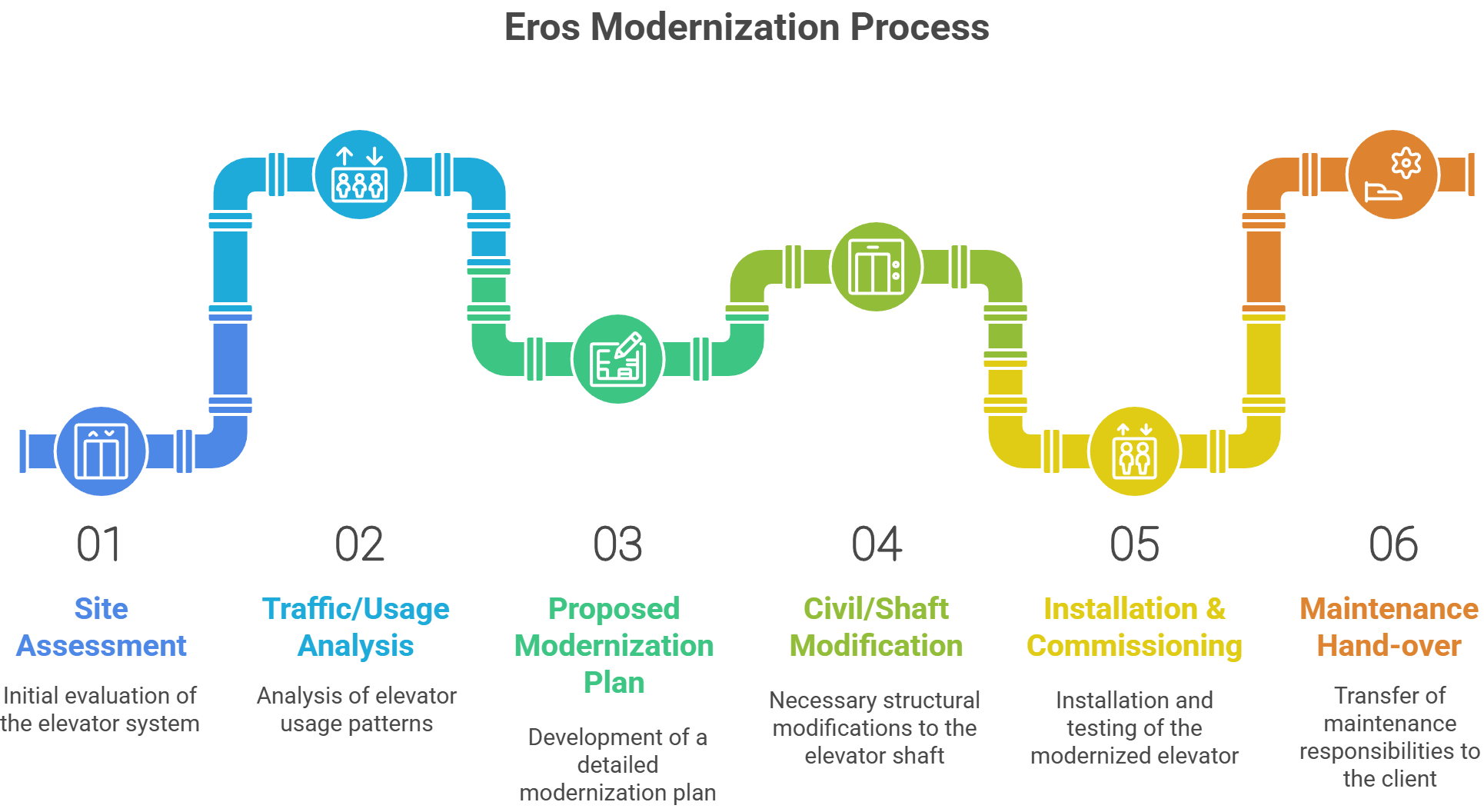
- Schedule a Modernization audit: Have Eros survey your elevator(s) – travel height, usage, fault history, control system age, spare parts situation.
- Request a detailed Modernization proposal: With scope, options (partial vs full), downtime estimate, cost breakdown, and expected benefits (energy, downtime, ride quality).
- Plan for building occupant communication: Inform residents/tenants of planned shutdown, alternative arrangements (temporary lift or stairs), timing.
- Decide on financing / budgeting: Modernization may be budgeted over one financial year or split; consider residual value improvement.
- Consider future-proofing: When modernising, choose components and systems that will remain supported and adaptable for the next 10-20 years.