Every Square Foot Matters
Urban India is growing vertically. Residential towers are taller, commercial developments are denser, and mixed-use projects are becoming the norm. Yet one challenge continues to follow every new development—parking.
For developers, architects, and project consultants, parking is no longer just a compliance requirement. It has become a critical part of project planning, influencing land utilization, customer experience, operational efficiency, and even the long-term value of the property.
This shift has led to the increasing adoption of automated parking systems, transforming the way buildings accommodate vehicles without consuming valuable real estate.
The Changing Reality of Urban Infrastructure
In rapidly growing metropolitan regions, parking is no longer just a design consideration—it is an urban planning challenge. The increasing adoption of automated parking systems in Mumbai, along with similar demand in Pune and Bengaluru, highlights how developers are rethinking parking strategies to maximize land utilization while delivering a better user experience
How Automated Parking Systems Work
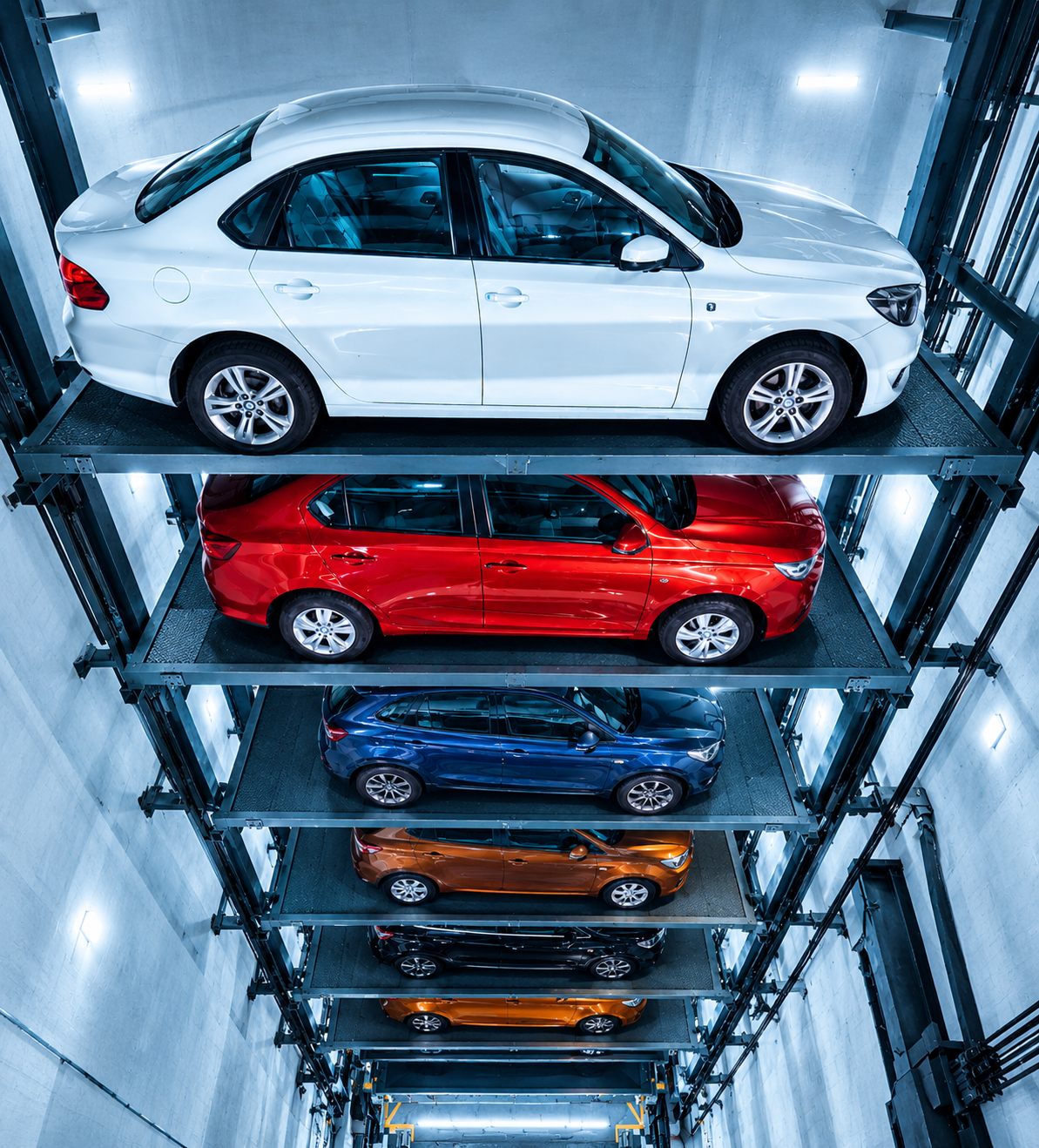
Many developers and property owners often ask how automated parking systems work. The concept is simple yet highly efficient. A driver parks the vehicle in a designated transfer area, and the system automatically moves and stores the vehicle in an allocated parking slot using advanced vertical and horizontal movement mechanisms.
When required, the vehicle is retrieved automatically and delivered back to the driver. By eliminating ramps, reducing circulation areas, and minimizing manual intervention, automated parking systems significantly improve space utilization and operational efficiency.
More Than Just Parking
Many people associate automated parking with luxury buildings or premium commercial projects. In reality, the technology has evolved into a practical solution for a wide range of developments.
Modern automated parking systems are now being incorporated into:
- Residential towers
- Commercial complexes
- Corporate offices
- Hospitals
- Hotels
- Educational institutions
- Mixed-use developments
The objective remains the same—maximize parking capacity without expanding the building footprint.
Automated Parking System for Residential Buildings
An automated parking system for residential buildings helps developers maximize parking capacity while enhancing convenience and security for residents. In cities where land is scarce and vehicle ownership continues to rise, these systems offer a practical way to accommodate more cars without increasing the building footprint.
Residents benefit from quicker vehicle retrieval, reduced traffic movement within basements, and enhanced vehicle safety.
Automated Parking System for Commercial Buildings
An automated parking system for commercial buildings improves visitor experience and optimizes available space in offices, retail developments, and mixed-use projects. Commercial properties often experience high vehicle movement throughout the day, making efficient parking management critical.
Automated parking solutions reduce congestion, minimize search time for parking, and create a seamless experience for employees, visitors, and customers.
Benefits of Automated Parking Systems
The benefits of automated parking systems extend far beyond parking efficiency. They positively impact land utilization, user convenience, safety, and environmental sustainability.
1. Better Utilization of Space
One of the biggest advantages of smart parking solutions is their ability to significantly increase parking capacity within the same area.
By eliminating ramps and minimizing circulation space, developers can accommodate more vehicles while optimizing the overall building design.
For projects located in densely populated cities, this translates into better planning flexibility and improved land efficiency.
2. A Better Experience for Residents and Visitors
Finding a parking space in a busy building can often be frustrating. Automated parking eliminates the need to navigate multiple basement levels or narrow driveways.
The driver simply parks the vehicle in a designated transfer area, and the system safely stores it in an allocated slot. Retrieval is equally simple, reducing time and improving convenience.
As expectations around smart buildings continue to rise, this seamless experience has become an important differentiator.
3. Improved Vehicle Safety
In a conventional parking structure, vehicles are exposed to accidental damage, unauthorized access, and unnecessary movement.
Automated parking systems minimize these risks by restricting human access to the parking structure. Vehicles remain securely parked until retrieved, reducing the possibility of scratches, collisions, or theft.
For residential communities and premium commercial developments, this added layer of security creates significant value.
Supporting Smarter Cities
Sustainability is increasingly influencing the way buildings are designed.
Automated parking contributes to greener infrastructure by reducing the time vehicles spend circulating within parking areas. Less driving means lower fuel consumption and reduced emissions.
When combined with energy-efficient building systems, automated parking becomes an important component of environmentally responsible urban development.
Selecting the Right Parking Solution
Not every project has the same requirements.
Factors such as plot dimensions, traffic flow, expected vehicle volume, building usage, and future expansion plans all influence the type of parking solution that should be implemented.
Some developments benefit from puzzle parking systems designed for compact spaces, while others require tower parking or customized automated solutions capable of handling higher volumes.
The success of any installation depends not only on the technology but also on proper planning, engineering expertise, installation quality, and long-term maintenance support.
Looking Beyond Installation
An automated parking system is a long-term infrastructure investment.
Regular inspections, preventive maintenance, software updates, and technical support ensure reliable performance for years to come. Developers and property managers increasingly prefer an experienced automated parking system provider who can manage the complete lifecycle—from design and installation to modernization and annual maintenance.
This integrated approach minimizes downtime while protecting the value of the investment.
The Future of Automated Parking Systems
The future of automated parking systems lies in intelligent, connected, and sustainable urban infrastructure. As cities become denser and land becomes increasingly valuable, developers will continue adopting automated parking technologies that improve efficiency while enhancing user experience.
Emerging innovations such as smart controls, data-driven monitoring, and integrated building management systems will further strengthen the role of automated parking in future-ready developments.
The Eros Group Approach
For over decades, Eros Group has been delivering engineering solutions that combine innovation, reliability, and practical functionality.
As a trusted automated parking system provider, Eros Group designs solutions around the specific requirements of each project rather than adopting a one-size-fits-all approach. From residential developments to large commercial complexes, every system is engineered to maximize efficiency, optimize space utilization, and provide dependable long-term performance.
With in-house expertise in elevators and automated parking systems, Eros Group offers clients the advantage of working with a single partner who understands the complete vertical mobility ecosystem.
Conclusion
Urban infrastructure is evolving, and parking can no longer be treated as an afterthought.
As cities continue to grow and land becomes increasingly valuable, automated parking systems offer developers an intelligent way to create more efficient, future-ready spaces. The rising adoption of automated parking systems in Mumbai, Pune, and Bengaluru demonstrates how modern developments are embracing technology-driven parking solutions that improve efficiency, enhance convenience, and support sustainable urban growth.